
RiverRise builds SEO, paid advertising, and content strategies
for outdoor gear and apparel brands — so you grow your
direct-to-consumer channel and own your customer relationships.
MORE REVENUE.
LESS RELYING ON RETAILERS.
OUTDOOR BRAND MARKETING : A FULL-FUNNEL STRATEGY FOR GEAR AND APPAREL BRANDS THAT WANT TO WIN DTC
The outdoor gear and apparel market has never been more competitive — or more full of opportunity for independent brands that know how to reach their audience directly.
Amazon has commoditized price comparison. Big-box retail has squeezed margins and muddied brand positioning. The independent outdoor brands winning right now aren’t competing on price or distribution — they’re competing on community, authenticity, and a direct relationship with the outdoor consumer that no platform or retailer can replicate.
Building that relationship requires a complete digital marketing strategy — one that finds your ideal customer during their research, converts them through a compelling brand experience, and keeps them coming back through retention channels you own. That’s what a real outdoor brand marketing system builds.
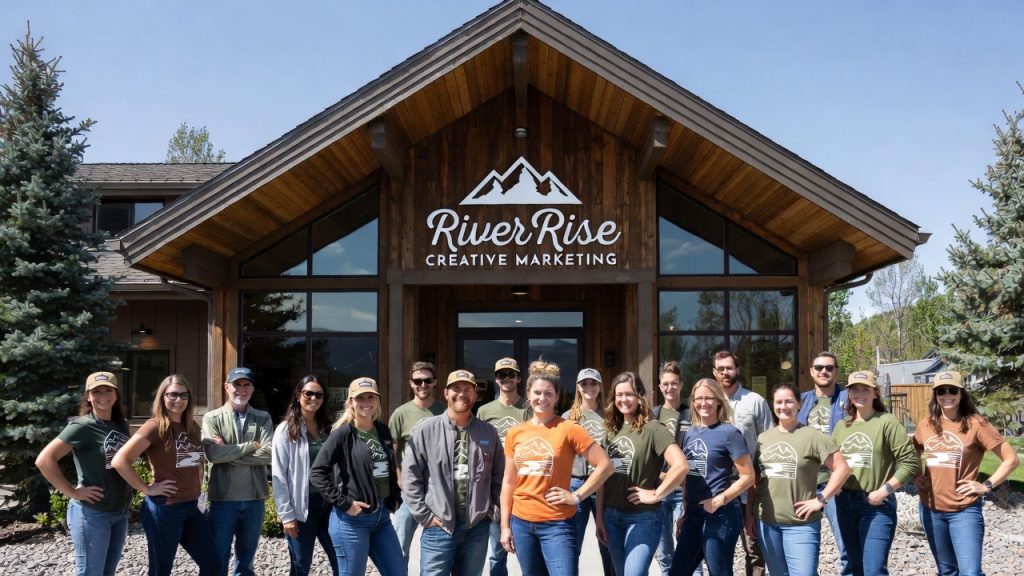
RiverRise Creative is a Bozeman-based digital marketing agency that works specifically with outdoor gear and apparel brands. We’re not a generalist agency that dabbles in outdoor — we live and work in the Mountain West, surrounded by the culture, the consumer, and the landscape your brand was built for. That context makes every strategy we build more accurate, more authentic, and more effective.
HOW THE OUTDOOR CONSUMER RESEARCHES AND BUYS
Understanding the outdoor consumer’s decision process is the foundation of an effective brand marketing strategy. These are informed, research-oriented buyers who rarely impulse purchase — especially for gear that matters to their performance and safety in the field.
The awareness phase. An outdoor consumer discovers new brands through content — YouTube reviews and field tests, Instagram follows, trail and backcountry forums, Reddit threads in gear-specific communities, and recommendations from athletes and influencers they trust. This is where brand presence and content strategy pay the highest dividends. Brands that show up consistently in the places outdoor consumers spend their research time build the consideration set that everything else flows from.
The research phase. When an outdoor consumer is seriously considering a purchase, they go deep. They read every review — on your site, on Outdoor Gear Lab, on Amazon, on Reddit. They watch comparison videos. They look for first-hand accounts from users who match their use case. They evaluate your brand story and values alongside your product specs. An outdoor brand with thin content, few reviews, and a weak digital presence loses at this stage to competitors who have invested in their information ecosystem.
The purchase phase. Conversion happens where friction is lowest and confidence is highest. A DTC brand with a fast, well-designed website, clear product information, strong social proof, and a frictionless checkout converts at a dramatically higher rate than one that sends customers to Amazon or REI to complete the purchase. Every point of friction in the DTC purchase experience is margin left on the table.
The loyalty and advocacy phase. Outdoor consumers are intensely loyal to brands they trust — and intensely vocal about gear that performs. A customer who becomes an advocate is worth multiples of their initial purchase value through repeat buying, referrals, and organic brand evangelism across the outdoor community. Retention marketing — email, loyalty programs, community building — compounds that value systematically over time.
THE CORE MARKETING CHANNELS FOR OUTDOOR GEAR AND APPAREL BRANDS
SEO
GOOGLE ADS
META ADS
CONTENT
WEB DESIGN
SEO — Capturing the Research-Phase Outdoor Consumer
Search engine optimization is the highest-ROI long-term channel for outdoor gear and apparel brands. The outdoor consumer searches extensively before buying — for product categories, specific use cases, comparisons, and reviews. A brand with strong SEO is present at every stage of that research process, building trust and consideration before the purchase decision is made.
Outdoor brand SEO operates across several distinct layers:
Product and category page SEO — ensuring your product pages rank for the specific searches buyers use when they're ready to purchase. "Lightweight fly fishing waders," "merino wool hunting base layer," "packable down jacket for backpacking" — these high-intent product searches are where purchase-ready buyers start. Properly optimized product and category pages capture that traffic directly.
Content and editorial SEO — long-form content targeting the research and comparison searches outdoor consumers use during the awareness and consideration phases. Gear guides, field test reports, buyer's guides, and use-case-specific content build topical authority, drive organic traffic from early-stage buyers, and position your brand as a credible resource before a purchase is ever considered.
Brand and collection SEO — optimizing for branded searches, product line searches, and the specific terminology your target outdoor consumer uses. Brand-aware SEO ensures you own your own search real estate and capture the consideration you've built through other channels.
We cover the full outdoor industry SEO strategy on our [outdoor industry SEO page →].
Google Shopping and Paid Search — Converting High-Intent Buyers
For outdoor gear and apparel brands, Google Shopping campaigns are among the most efficient paid channels available. A buyer searching "packable rain jacket" or "fly fishing net" is actively in the market — Google Shopping puts your product in front of them at that exact moment with a visual, price-competitive listing.
Beyond Shopping, branded and non-branded paid search campaigns allow precise targeting of buyers at the decision phase — capturing searches for your brand, your product categories, and your direct competitors. Retargeting campaigns re-engage site visitors who didn't purchase on first visit, converting a significant portion of otherwise lost traffic.
We build Google Ads strategies for outdoor brands that are structured around purchase intent, not impressions — optimizing for revenue and ROAS, not click volume.
Facebook and Instagram advertising remain the most powerful paid channels for outdoor brand awareness and direct-response conversion. The targeting capabilities — interests, behaviors, demographic filters, lookalike audiences built from your customer list — allow outdoor brands to reach the specific outdoor consumer profile your products are built for, at scale.
For outdoor gear and apparel brands specifically, Meta advertising serves two distinct functions. Upper-funnel campaigns build brand awareness among outdoor consumers who match your ideal buyer profile but don't know you yet. Lower-funnel retargeting campaigns convert site visitors, cart abandoners, and past customers through targeted offers and social proof. Both are necessary components of a complete Meta strategy.
We build Meta campaigns that are structured to work together across the funnel — not isolated campaigns that optimize in isolation without accounting for the full purchase journey.
Content Marketing — Building Brand Authority and Organic Reach
Content is the currency of the outdoor industry. Outdoor consumers read gear guides, watch field tests, follow athletes and explorers, and consume an enormous volume of outdoor content as part of their lifestyle — not just when they're shopping. Brands that invest in genuine, high-quality content become part of that consumption pattern and build the trust and familiarity that drives long-term purchasing.
An outdoor brand content strategy includes: product-focused editorial content optimized for search, field-test and review content that demonstrates real-world performance, athlete and ambassador content that connects brand values to aspirational outdoor pursuits, and destination and use-case content that puts your products in the context your customers care about.
This content serves SEO, fuels social media, supports paid advertising creative, and builds the email marketing asset simultaneously. It's the most leveraged marketing investment an outdoor brand can make.
Email Marketing — Your Owned Channel for Repeat Revenue
For DTC outdoor brands, email is the highest-margin revenue channel available. Your email list is an audience you own completely — no algorithm changes, no platform policy updates, no ad auction to win. A well-managed email program for an outdoor brand typically generates 20–30% of total DTC revenue at a fraction of the cost of paid acquisition.
A complete outdoor brand email strategy includes: welcome sequences that introduce new subscribers to your brand story and best products, product launch campaigns that generate opening-day revenue from your most engaged audience, seasonal campaigns aligned with the outdoor calendar, and re-engagement sequences that reactivate dormant subscribers before they churn permanently.
Building the list is as important as the campaigns themselves. A strong lead magnet — a gear guide, a field test report, an exclusive product preview — converts site visitors into email subscribers at a dramatically higher rate than a generic "sign up for our newsletter" prompt.
Website Performance — Your DTC Engine
For an outdoor gear or apparel brand, the website is the business. Every other marketing channel exists to drive traffic to it. A website that loads slowly, presents products poorly, lacks social proof, or creates friction in the checkout process is the single biggest constraint on DTC growth.
Outdoor brand websites need to accomplish specific things exceptionally well: communicate brand identity and values immediately; present products in context — on athletes, in the field, in real use — not just in a studio; build conversion confidence through reviews, certifications, and social proof; and make the path from product discovery to purchase as short and frictionless as possible.
We audit outdoor brand websites against these standards and address the conversion gaps that are suppressing DTC revenue.
THE OUTDOOR BRAND CATEGORIES WE WORK WITH
RiverRise works with outdoor gear and apparel brands across the Mountain West and beyond. Each category has distinct buyer behavior, competitive dynamics, and marketing priorities.
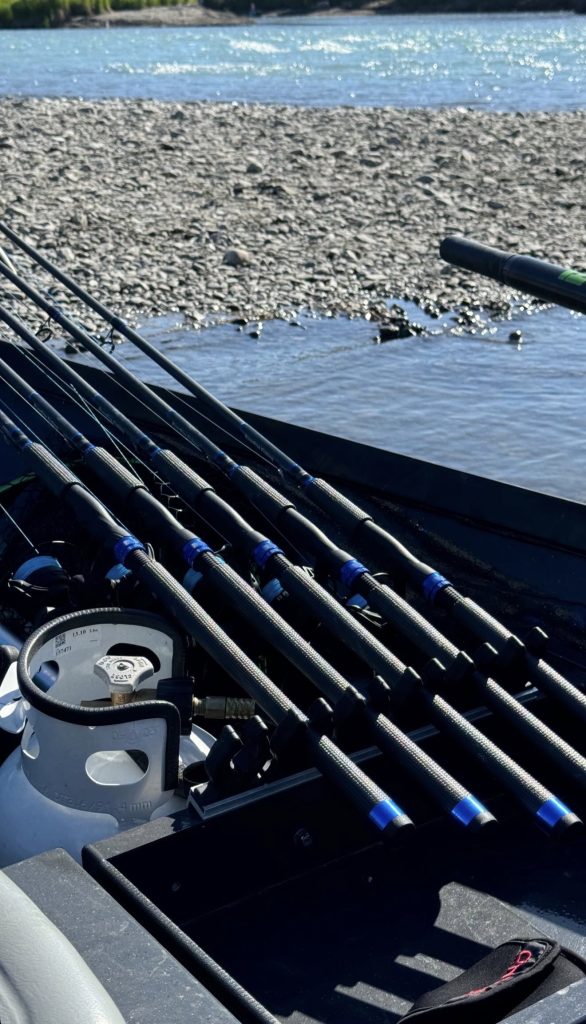
Fishing and fly fishing gear — rods, reels, waders, flies, packs, and accessories for the fly fishing market. A highly engaged, research-intensive buyer base with strong community channels and a premium pricing tolerance for quality brands.
Hunting gear and apparel — base layers, outerwear, packs, optics, and accessories for the hunting market. A buyer who researches extensively, values performance data and field testing, and is loyal to brands that demonstrate genuine understanding of the hunting environment.
Backcountry and mountaineering — technical apparel, shelter systems, navigation tools, and performance gear for serious backcountry pursuits. A small but highly influential market segment with outsized content consumption and word-of-mouth impact.
Casual outdoor and lifestyle apparel — outdoor-inspired apparel and footwear brands that bridge performance and lifestyle. Larger addressable market, higher social media relevance, and Meta advertising as a primary growth channel.
Camping and overlanding gear — shelter, cooking, navigation, and vehicle-based adventure gear. A rapidly growing market with strong YouTube and community content channels.
Water sports and paddle sports — kayaking, rafting, SUP, and whitewater gear. Destination-adjacent market with strong regional search patterns and event-driven community channels.
WHAT MAKES OUTDOOR BRAND MARKETING DIFFERENT?
Two dynamics define outdoor gear and apparel marketing in ways that general e-commerce marketing advice consistently misses.
Authenticity is non-negotiable. The outdoor consumer has a finely tuned sense for brands that genuinely understand their pursuit versus brands that are borrowing the aesthetic without the substance. Marketing that feels performative — stock photography of models in gear they’ve never actually used, lifestyle content that doesn’t reflect real outdoor experience — damages brand credibility in a community where authenticity is the primary currency. Every piece of content, every campaign, every brand communication has to reflect genuine understanding of the activity and the environment your products are built for. This is where a Mountain West-based agency with real outdoor context has a fundamental advantage over a coastal generalist operation.
The community is the channel. The outdoor industry has some of the most powerful word-of-mouth and community dynamics of any consumer market. Forums, trail communities, species-specific clubs, backcountry groups, fly fishing clubs — these are where gear decisions are made and brands are made or broken. Marketing that ignores these community channels and focuses only on paid acquisition misses the organic momentum that defines long-term outdoor brand growth. We build strategies that engage community channels alongside paid and owned media — because for outdoor brands, community is a marketing channel with compounding returns.
THE RIVERRISE APPROACH.
Every outdoor brand engagement starts with a clear-eyed audit: your current organic search footprint, your DTC conversion rate and website performance, your paid channel efficiency, your content library and gaps, and how your brand is positioned relative to competitors in your specific gear category.
From that foundation we build a prioritized strategy — DTC revenue first, then the content and SEO work that builds sustainable organic growth, then the paid channels that reach new audiences at scale. We execute the work, report monthly on revenue-connected metrics, and treat your DTC growth as the outcome that actually matters.
OUTDOOR BRAND MARKETING FREQUENTLY ASKED QUESTIONS
How Do You Compete With Established Outdoor Brands That Have Much Larger Marketing Budgets?
By being more specific, more authentic, and more targeted. Large outdoor brands spend broadly to maintain mass market awareness. An independent brand can win specific segments — a particular activity, a particular geography, a particular buyer profile — with focused content, niche community engagement, and precision paid advertising that large brands can't replicate at their scale. Niche depth beats broad awareness for independent outdoor brands at almost every stage of growth.
Is Amazon A Threat To Our DTC Channel?
Amazon is both a threat and an opportunity — and the right approach depends on your brand's specific situation. For discovery and volume, Amazon can be a valuable channel. For brand building, margin preservation, and customer relationship ownership, it works against you. We help outdoor brands develop a channel strategy that uses Amazon appropriately without becoming dependent on it — building DTC as the primary growth engine while managing Amazon as a supplementary volume channel.
How Important Is Influencer Marketing For Outdoor Brands?
It depends heavily on the category and the influencer. Micro-influencers with genuine credibility in specific outdoor communities — a respected fly fishing guide with 8,000 Instagram followers, a well-known backcountry hunter with an active YouTube channel — consistently outperform macro-influencers with large but less engaged followings. We help outdoor brands identify the right community influencers and structure partnerships that feel authentic rather than transactional.
How Do You Measure Success For An Outdoor Brand Marketing Campaign?
Revenue-connected metrics — DTC conversion rate, revenue per visitor, customer acquisition cost, email list growth, repeat purchase rate, and lifetime customer value. We don't optimize for impressions, followers, or engagement metrics in isolation. The question we ask about every marketing activity is: does this contribute to DTC revenue growth? If the answer isn't clear, we reconfigure the strategy until it is.
What's The Minimum Viable Marketing Budget For An Outdoor Gear Brand?
It depends on your current stage and growth goals. A brand focused on building organic foundation — SEO, content, email list — can operate effectively at a lower budget than one running paid acquisition campaigns simultaneously. We start every engagement with a free audit that helps calibrate where your specific budget will generate the best return before any commitment is made.